
Sahuayo: butchery, slaughterhouse
by Sandra Dolores Gómez Amador
I was not a feral thing yet, not back then. Along the bend in the river,
where the tabachín trees grew and the split light of the sun rotted, I was only a girl.
But a butcher turns into a butcher out of need and sorrow, and we lived
in a ghost town back then. The day I first became a butcher, my grandfather incanted
Santa Lucía’s prayer softly in my ear as I beheaded a rabbit we later devoured
in the back of the slaughterhouse. That day, he explained to me that to kill an animal can be sacred,
if you do it right. We had cared for the rabbit for months, and he wanted us to consecrate every
single part of its small body. I held its head in my hands, as I often did with the animals
we killed back then. I thought it was the same size as the priscos we ate for days on end when
Sahuayo was first held under siege by a group of hungry, heartless, narco men.
I popped its eyes out, as carefully as I could, washed them in the stream of the river,
and one of the narcos passing by spat on the water while looking at the nape of my neck.
I should have held that omen in my palms back then. I should have known that men will burn
their hometowns to the ground and never feel any regret, that butchers will be cruel to you
even if they love you. Perhaps living in a callous city turned my grandfather into a cruel man,
because I never heard him pray again. Each time he killed an animal, he would eat the meat
and leave the bones and skin to rot. He learned of blades, and knives, and razors,
and often rejoiced in the animals’ howls as he made me watch. I felt my chest ripen at the vicious
sight. The siege lasted months on end, and he forgot all about sacredness. But being a butcher
means that you sometimes are an animal too, if you do it right. And animals understand
of worship; will snarl, and bite, and tear through flesh in the name of devotion.
So I decided to take the skin and offal and hold it tightly against my body. I would often walk
to the river at dawn, covered in viscera, and tried to wash away his sins. I only stopped
when the river of Sahuayo was taken by the men, who loved to take, and take, and take.
But I guess an animal cannot turn into anything else once it has known pain. So years later, when
the men died and their bodies were found in the river, I bathed in the water with the bones,
and the guts, and the remains of every animal my grandfather had once killed
without an ounce of pity. For the men, I did not care much. Everything looked the same
underwater back then. But that last time, when I walked back to the butchery,
I took a glass full of river water and poured it into my grandfather’s coffee mug.
He drank all of it, got bed sick for two weeks, and I only fed him the parts of animals
he had discarded before. If the meat had to kill him, that was a risk I was willing to take.
As it turns out, he did not die and the river never recovered from the pillage of the men.
All alone in that crater that was once water, I learned that men are not faithful
to their countries or even to their blood, and that a girl’s homeland will always be her fury.
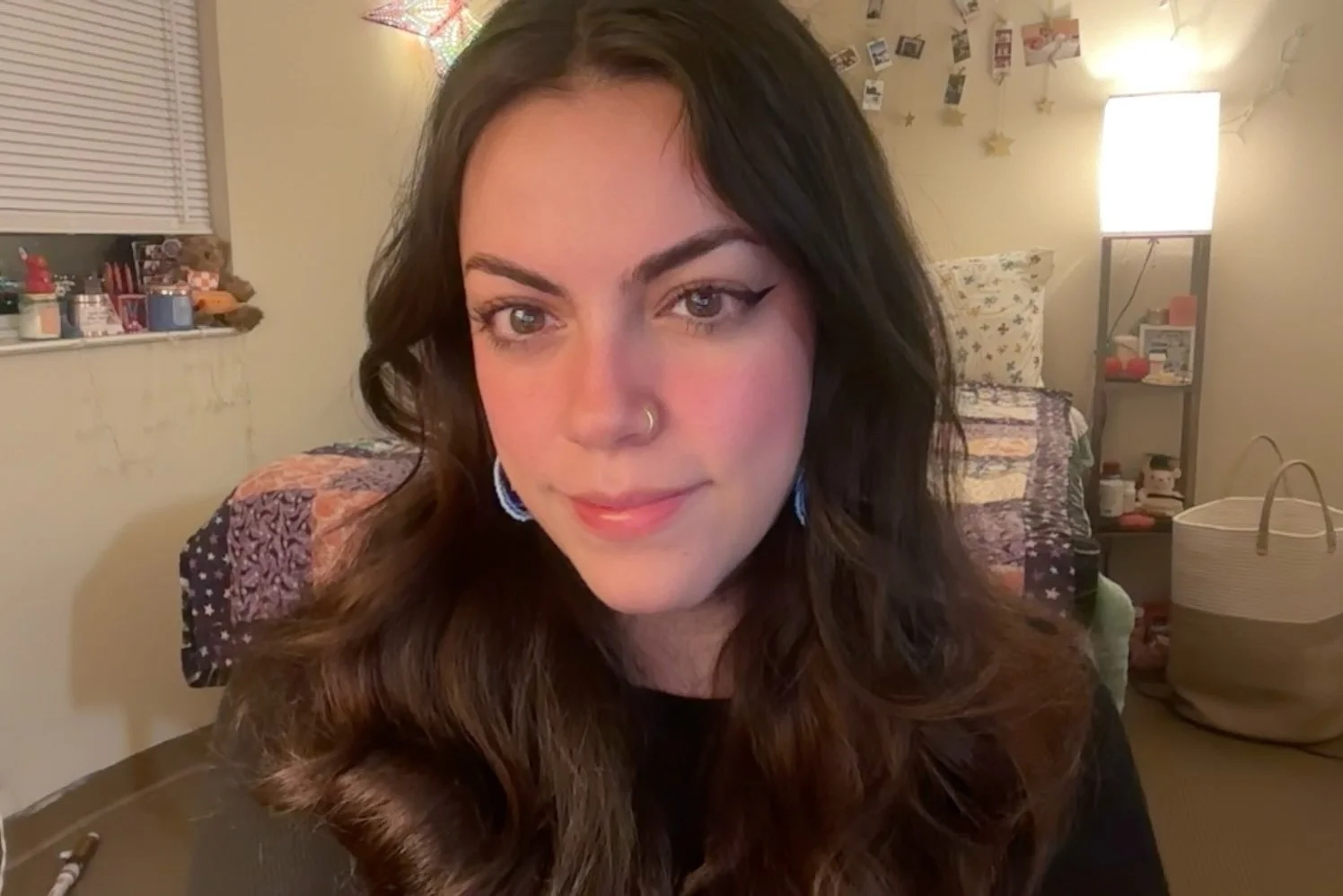
Born and raised in México, Sandra Dolores Gómez Amador is a poet, researcher, and translator. Her work has been supported by Tin House, Letras Latinas, The Kenyon Review Workshop, McCormack Writing Center, and others. She is currently a PhD student in an interdisciplinary program focusing on Hispanic Studies and Creative Writing. Find out more about her work at sandradolores.com